

The most important information about cordless screwdrivers
WALTER Guide: Cordless Screwdrivers
When is which cordless screwdriver the right choice? What makes a good cordless screwdriver? How much power does a cordless screwdriver need? Which screw is best for which material? And what does the voltage rating actually tell you about the battery? Questions that every DIY enthusiast has surely asked themselves at some point! This WALTER guide not only answers these questions but also provides many other useful tips on this fascinating topic. Thanks to our over 100 years of experience, this guide is beneficial for everyone, not just beginners.
Cordless screwdriver vs. drill
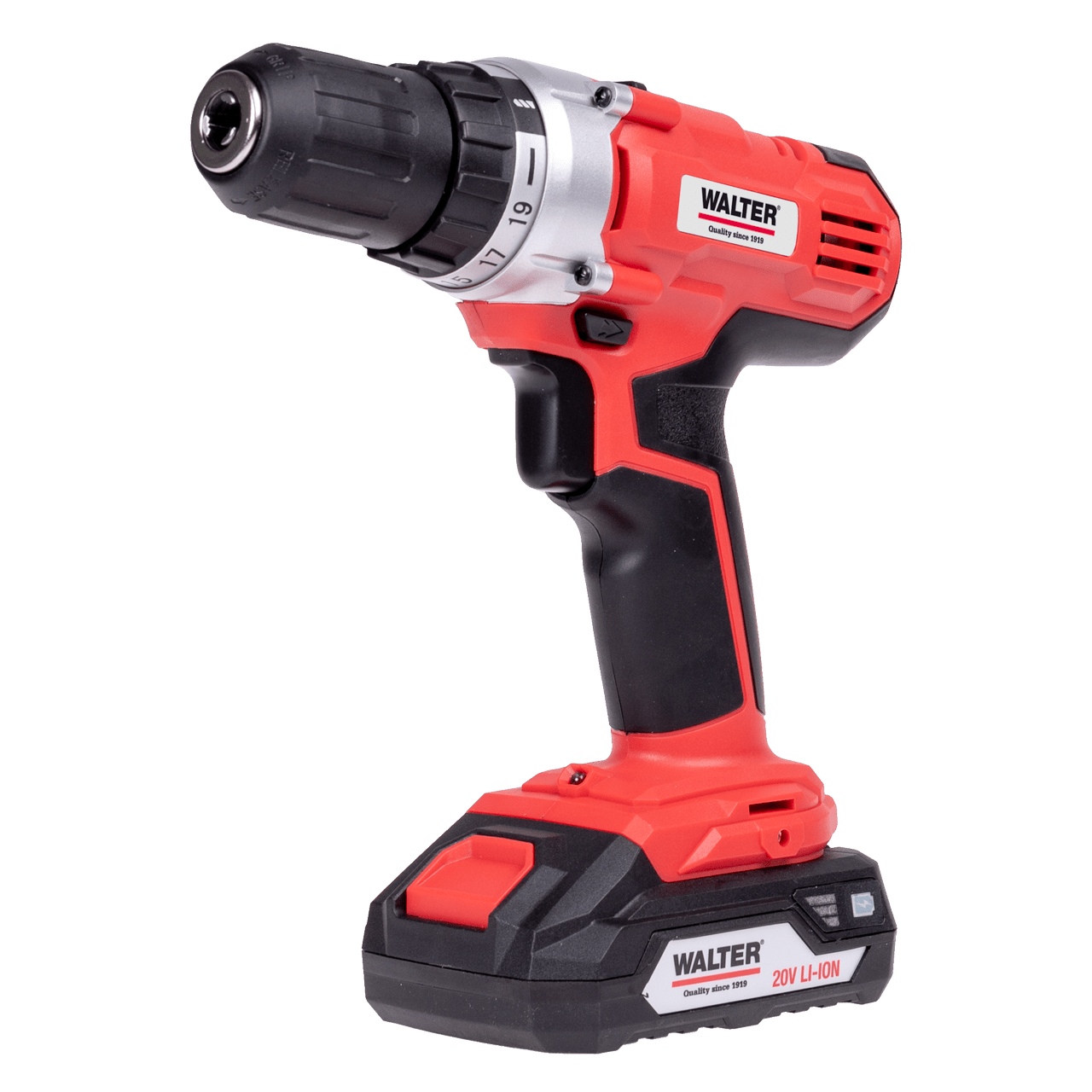
If you only need to do minor jobs around the house, like tightening a chair leg or moving a shelf, a small and handy cordless screwdriver is perfectly adequate. However, if you have regular or larger jobs to do, we recommend one of our top sellers, such as the 20V cordless drill/driver . With it, you can not only drive screws but also drill holes in walls or other materials. It's significantly more powerful and therefore guarantees consistent and reliable performance, even in harder materials.
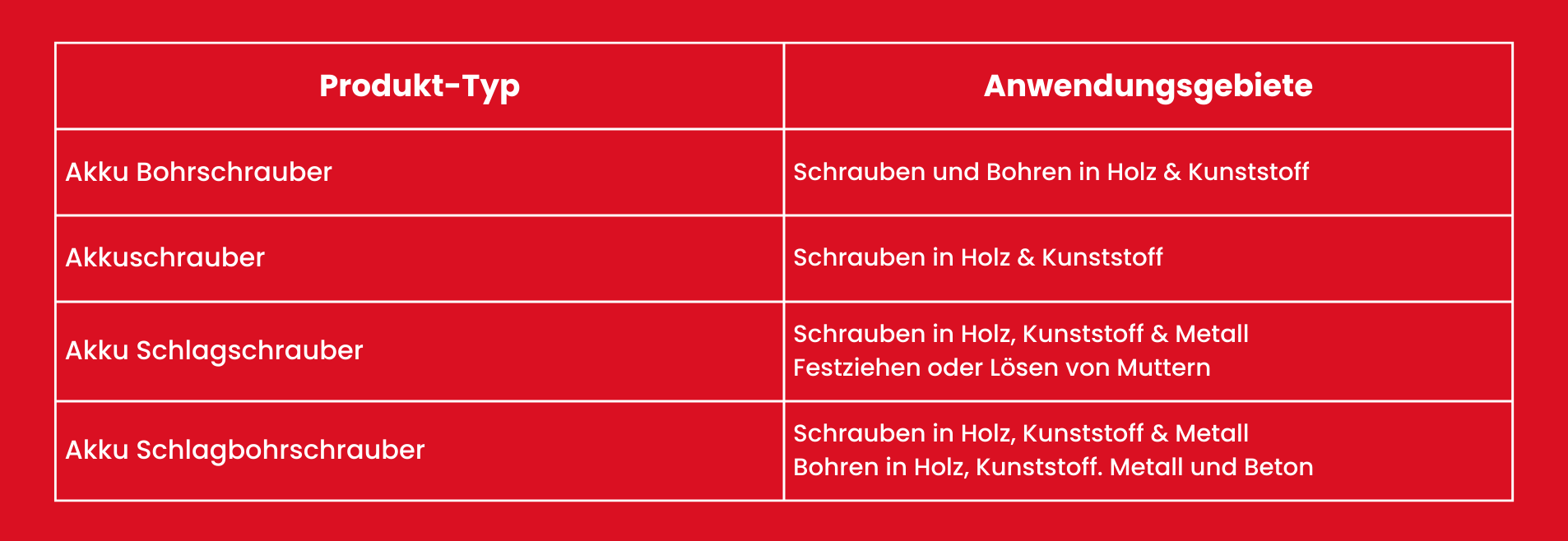
There are many different models of cordless screwdrivers, cordless drill drivers, cordless rotary hammers and cordless impact drill drivers, but which one is right for your individual requirements?
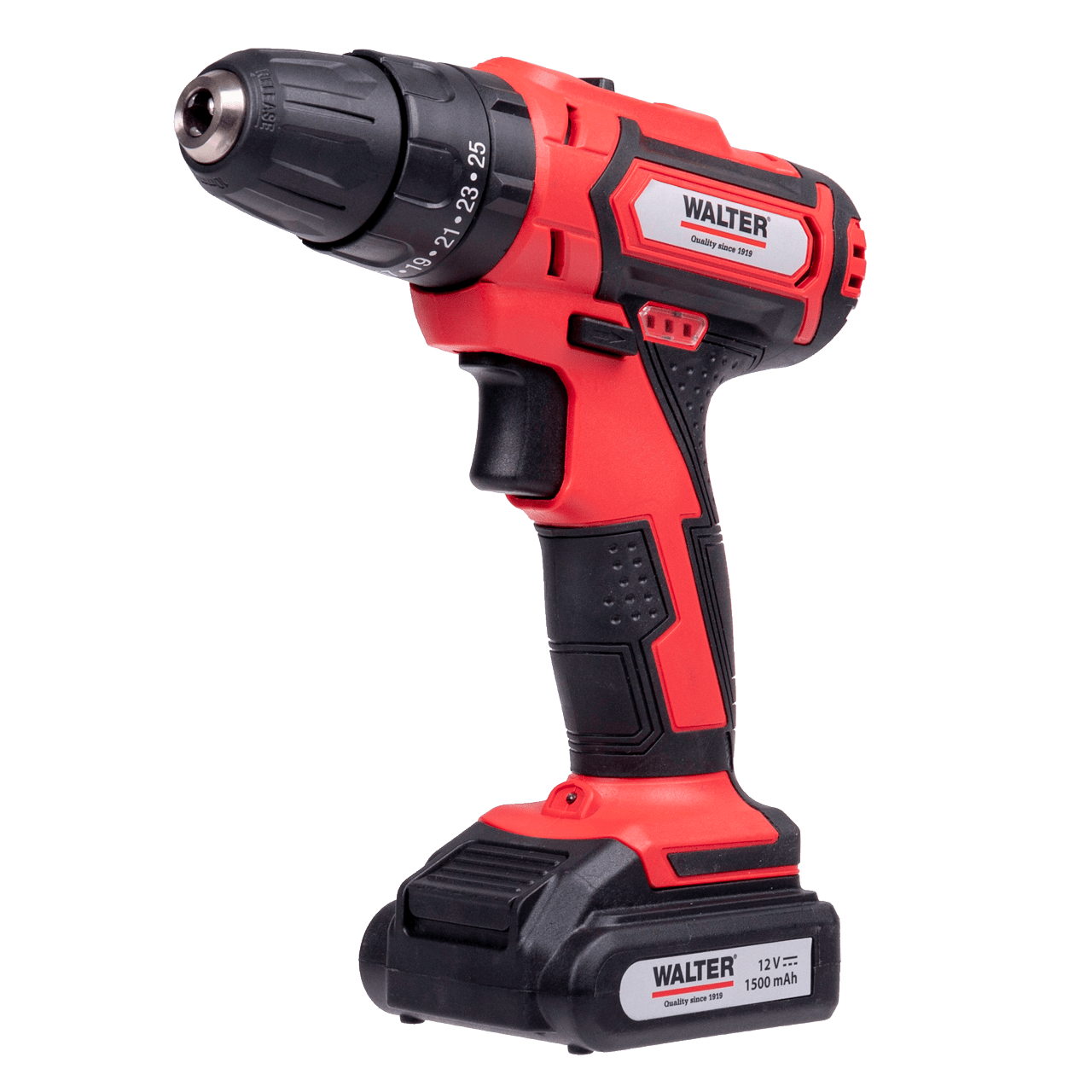
- Cordless drill/driver: A cordless drill/driver is best used for screwdriving and drilling in wood or plastic. These tools are generally suitable for both DIY enthusiasts and beginners. In most cases, they are equipped with a two-speed gearbox, with the slower speed for screwdriving and the faster speed for drilling. This versatile tool should be in every household and can be useful for light to heavy-duty applications.
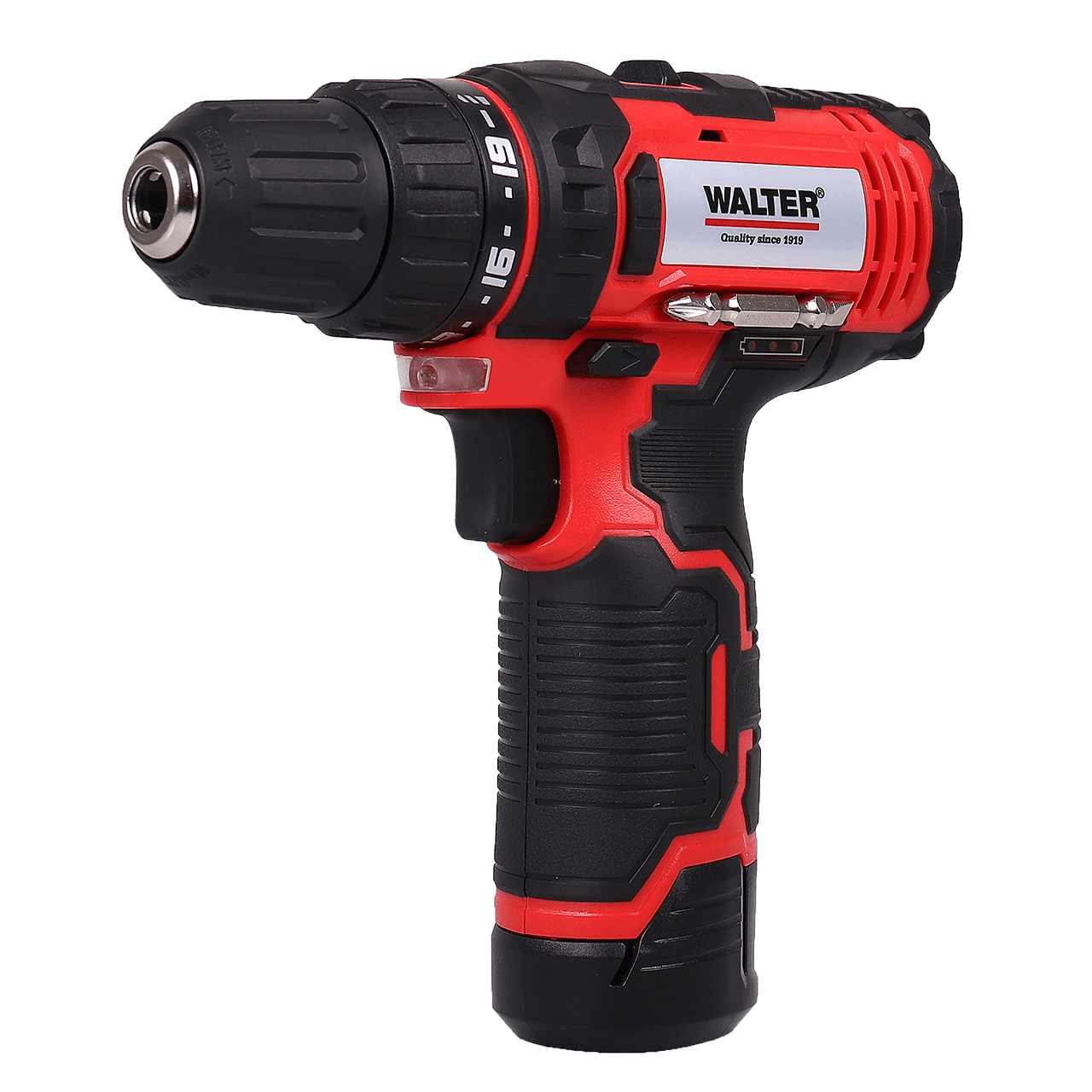
- Cordless screwdriver: A cordless screwdriver is only suitable for tightening and loosening screws. It's usually more compact and therefore helpful in tight spaces around the house, but it often has less power and is generally only recommended for occasional use. It can be used to tighten and loosen screws in wood and plastic. Unlike other models, cordless screwdrivers usually have a bit holder instead of a conventional chuck. You should definitely consider this before buying, as using a different bit will require a separate chuck.
- Cordless impact wrenches: These are suitable for driving screws into wood, plastic, and metal. They can also easily loosen and tighten nuts – this is particularly helpful when changing car tires. Their performance specifications are correspondingly higher, and they are primarily aimed at DIY enthusiasts and professional tradespeople.
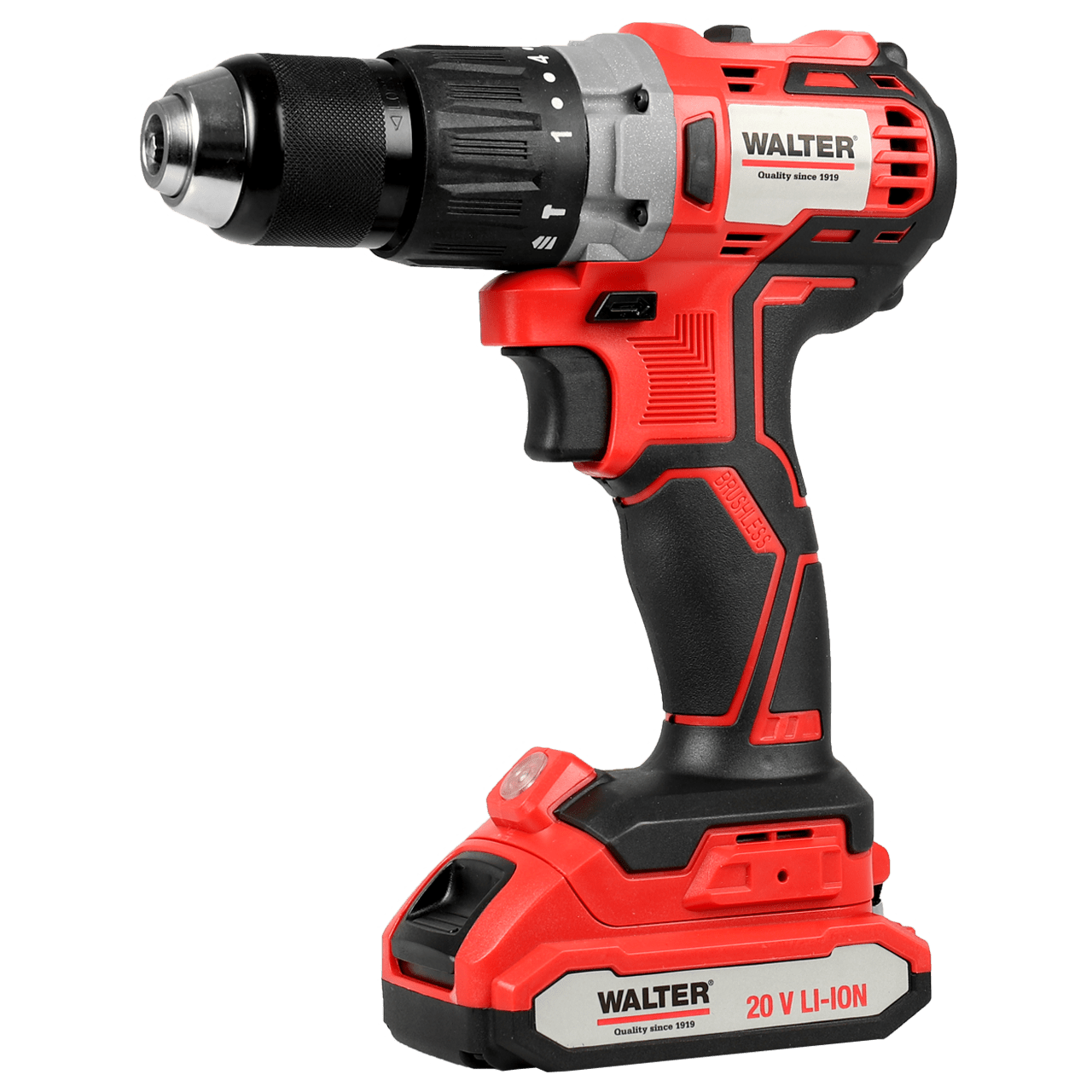
- Cordless impact drills: Cordless impact drills are not only suitable for loosening and tightening screws in a wide variety of materials, but thanks to their drilling and impact functions, they can also drill holes in most materials, such as concrete. They often boast high performance specifications and are suitable for both amateurs and professionals.
Torque and adjustable speed
Torque plays a crucial role in all models. Its basic function is that a slip clutch engages as soon as the set torque is exceeded. Especially when working with wood, this torque cut-off prevents the screw from penetrating too deeply into the material. As always, the more torque settings available, the more precisely this force can be adjusted. In most cases, cordless screwdrivers with variable speed and high torque are preferable to those with lower torque, as they offer a wider range of applications.
The different battery types
- Despite their different technical specifications, all screwdrivers and impact drills have one thing in common: the battery . Without it, none of these tools could drive screws or drill. We'll briefly explain the difference between nickel-metal hydride (NiMH) and lithium-ion (Li-ion) batteries. The battery type used in your screwdriver is either printed directly on the battery itself or listed in the technical specifications.
- Lithium-ion battery: Li-ion batteries are an electrochemical power source based on lithium. They have a particularly high energy density and a significantly longer lifespan than other battery types. Thanks to state-of-the-art technology, they are especially well-suited for mobile devices, as their high energy density allows for a relatively small battery pack.
- Nickel-metal hydride battery: The NiMH battery is a relatively old technology, frequently used in the low-voltage range up to 2.5 V. However, its connection is very sensitive to overcharging, and in this case, a rapid drop in performance can be observed relatively quickly. Furthermore, they are sensitive to heat and cold, so operating them below zero or above 30°C can be problematic.
Whether built-in or external battery, WALTER batteries meet all relevant safety standards and undergo sufficient quality control before being sold.
Furthermore, WALTER exclusively uses lithium-ion batteries without memory effect, making them particularly durable.
You can also find the right battery for your WALTER tool in our online shop.
What do volts or milliampere-hours tell us about the battery?
The voltage rating measures the voltage in the battery, and the mAh rating measures the storage capacity; together, these values give the energy in watt-hours. Batteries with a high voltage rating are only necessary when either high torque or high speed is required, for example, when sawing or drilling.
Far more important than a high voltage rating is the battery's efficiency. A battery with a lower voltage can have a higher efficiency than one with a higher voltage if the milliampere-hour (mAh) capacity is higher, meaning more energy can be drawn from the battery.
How do you properly charge a high-performance battery?
The battery is the heart of every battery-powered device, so it should be given special care to avoid high costs!
Generally, a lithium-ion battery should never be fully charged, but also never completely discharged. A operating range of 20-80% is ideal . Why is that?
- If the battery is too low or completely discharged, the current flows into the battery too quickly, and in the worst case, it overheats. This can subsequently have several negative effects on the battery, such as cell damage. As a result, the battery can lose capacity over time.
- If the battery charge level exceeds 80% , the current has to be forced into the battery at a much higher density, which can cause overheating and, in the long run, permanent damage. Overcharging the battery permanently disrupts its chemical storage capacity. Therefore, it's best to follow the charging instructions in your battery's user manual!
- Another important detail is timing . Batteries should only be recharged when their performance noticeably decreases.
In contrast, high-quality WALTER batteries have built-in temperature sensors, making overheating impossible.
If you are not going to use the battery for an extended period, remove it from the device and try to store it in a cool place, but not in damp conditions or freezing, to prevent it from self-discharging. At a room temperature of 22°C, the battery will self-discharge by approximately one percent per day.
chuck and clamping range
The chuck connects the drill bit to the tool itself. It should therefore always be in good working order, as a worn chuck can no longer transmit clean rotation and will thus cause the hole or screw to be stripped.
Furthermore, the chuck's capacity is very important, as it determines the maximum size of drill bit that can be used. However, not only the maximum capacity but also the minimum capacity is relevant here. This ensures greater flexibility.