


Product data

  • Product number: 613319
  • Material: SK5 Stahl
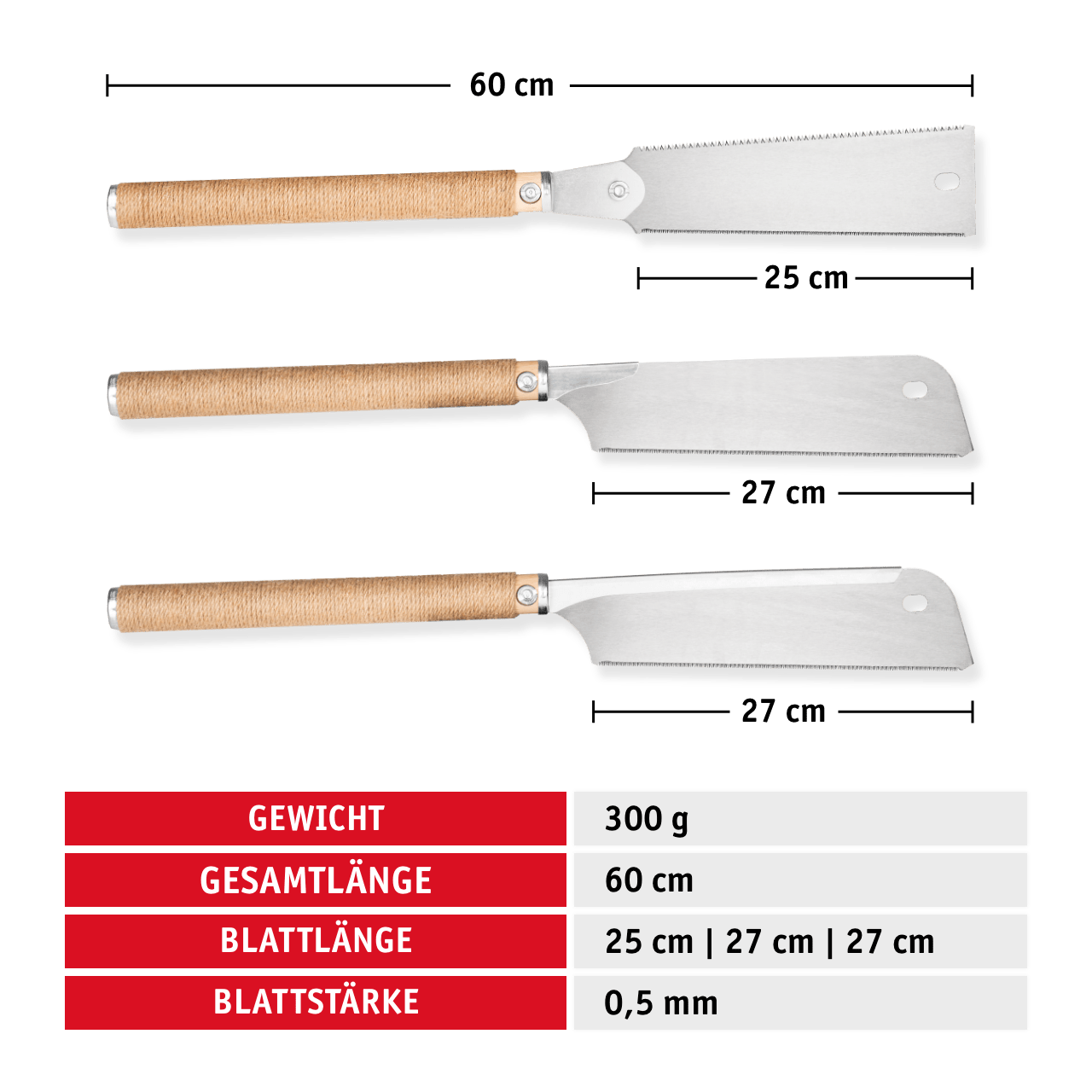
  • Weight: 300 g
  • Length: 30 cm
  • Handle Material: Buchenholz
  • Blade Thickness: 0,5 mm
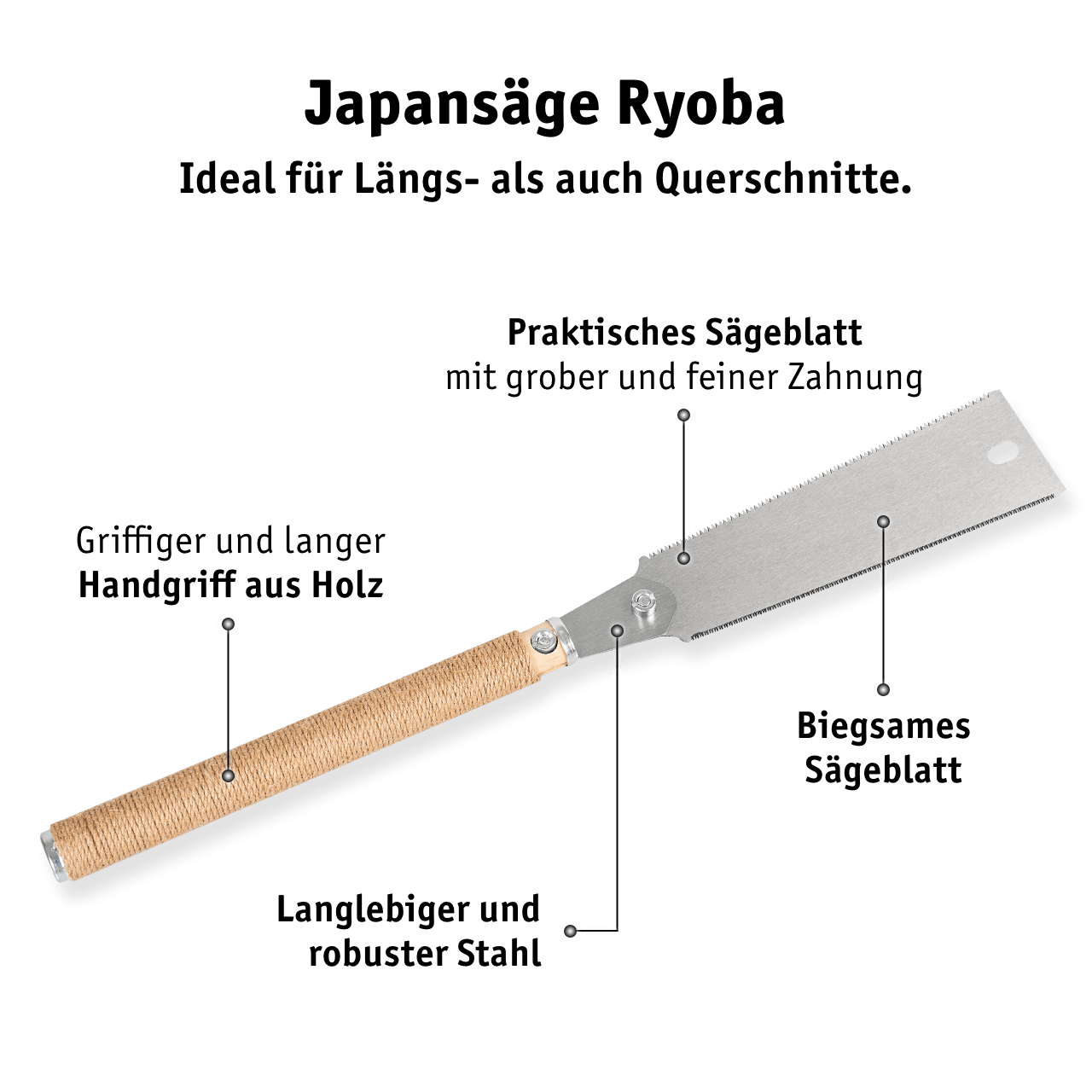
  • Blade Length "Ryoba": 250 mm
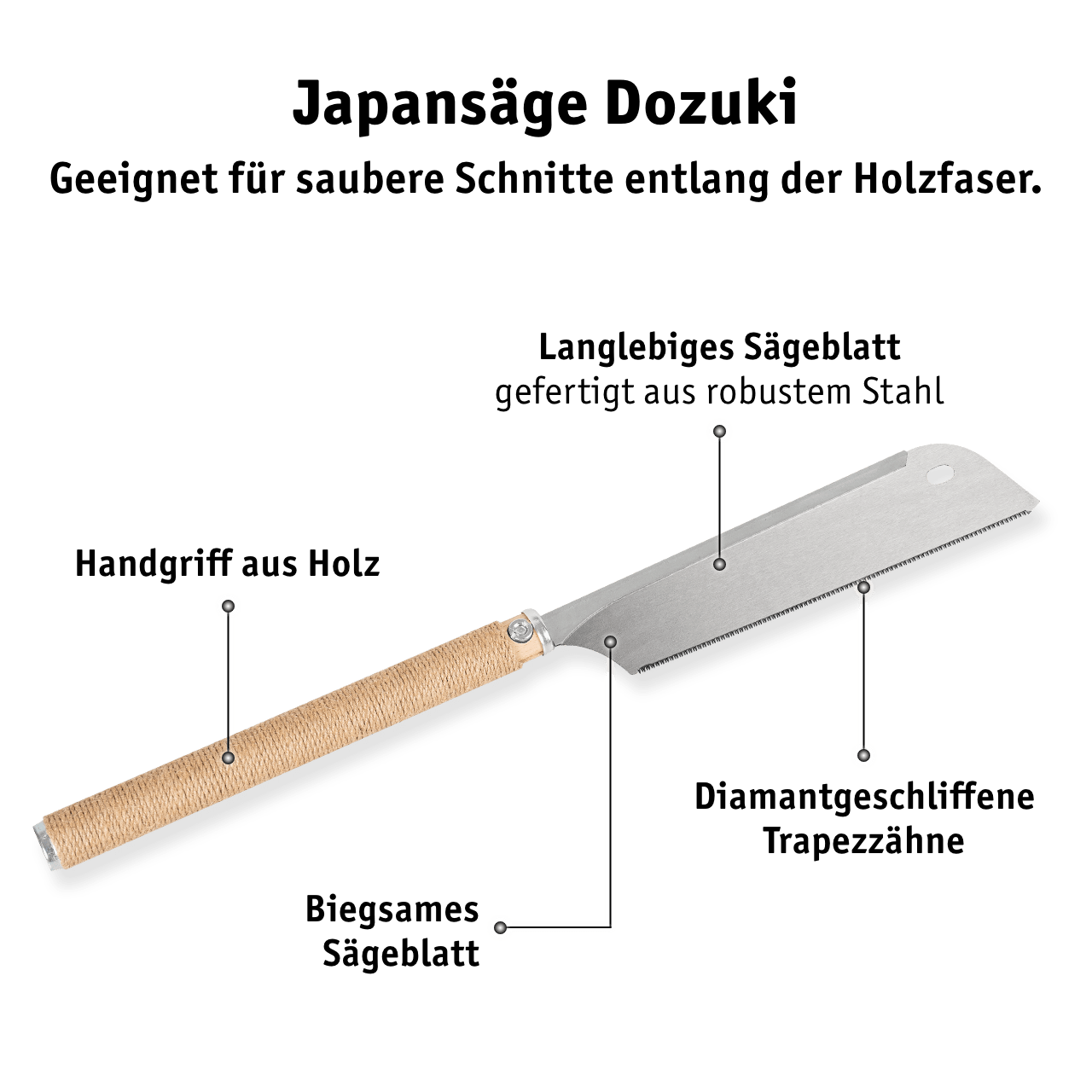
  • Blade Length "Dozuki": 270 mm
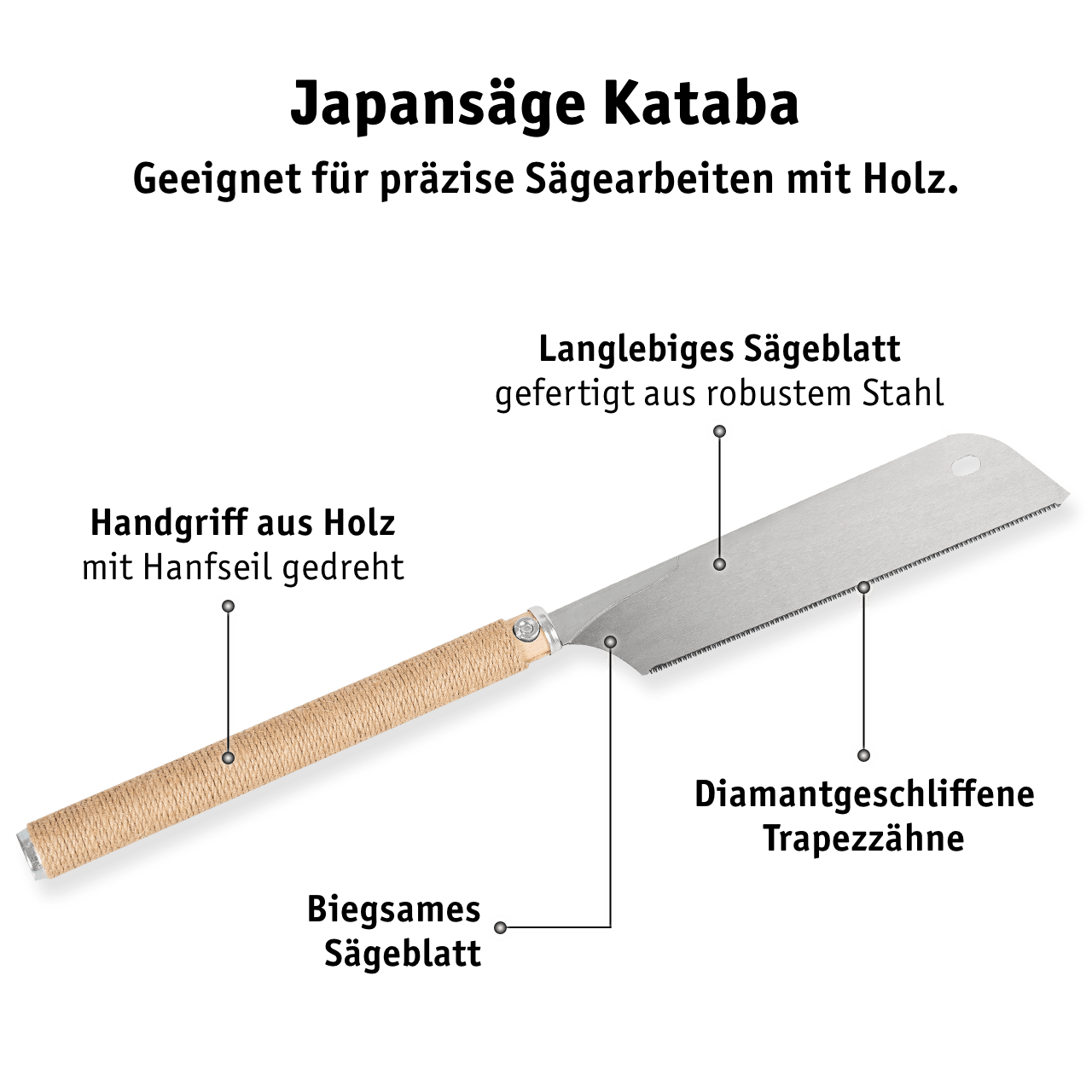
  • Blade Length "Kataba": 270 mm

Japanese saws: Precision tools for fine woodworking

Japanese saws are handsaws rooted in Japanese craftsmanship and specifically designed for precise woodworking. Unlike Western saws—such as the dovetail saw—which cut by pushing, Japanese saws are pull saws. This means that the cuts are made by pulling the saw, resulting in thinner and more precise cuts.

The special features of this type of saw

The blade of a Japanese saw is very thin, usually between 0.3 and 0.6 millimeters. These thin blades allow for fast and effortless cutting. The saw teeth are arranged in either a trapezoidal or triangular pattern – for clean and precise work.

Versatile applications

Japanese saws are primarily used for cutting and processing wood. They are suitable for both solid wood such as lumber or logs and engineered wood products like particleboard. Typical applications include tree care, carpentry, and fine woodworking.


Japanese saws come in various designs:

  • Single-sided toothed saws: Ideal for rip cuts
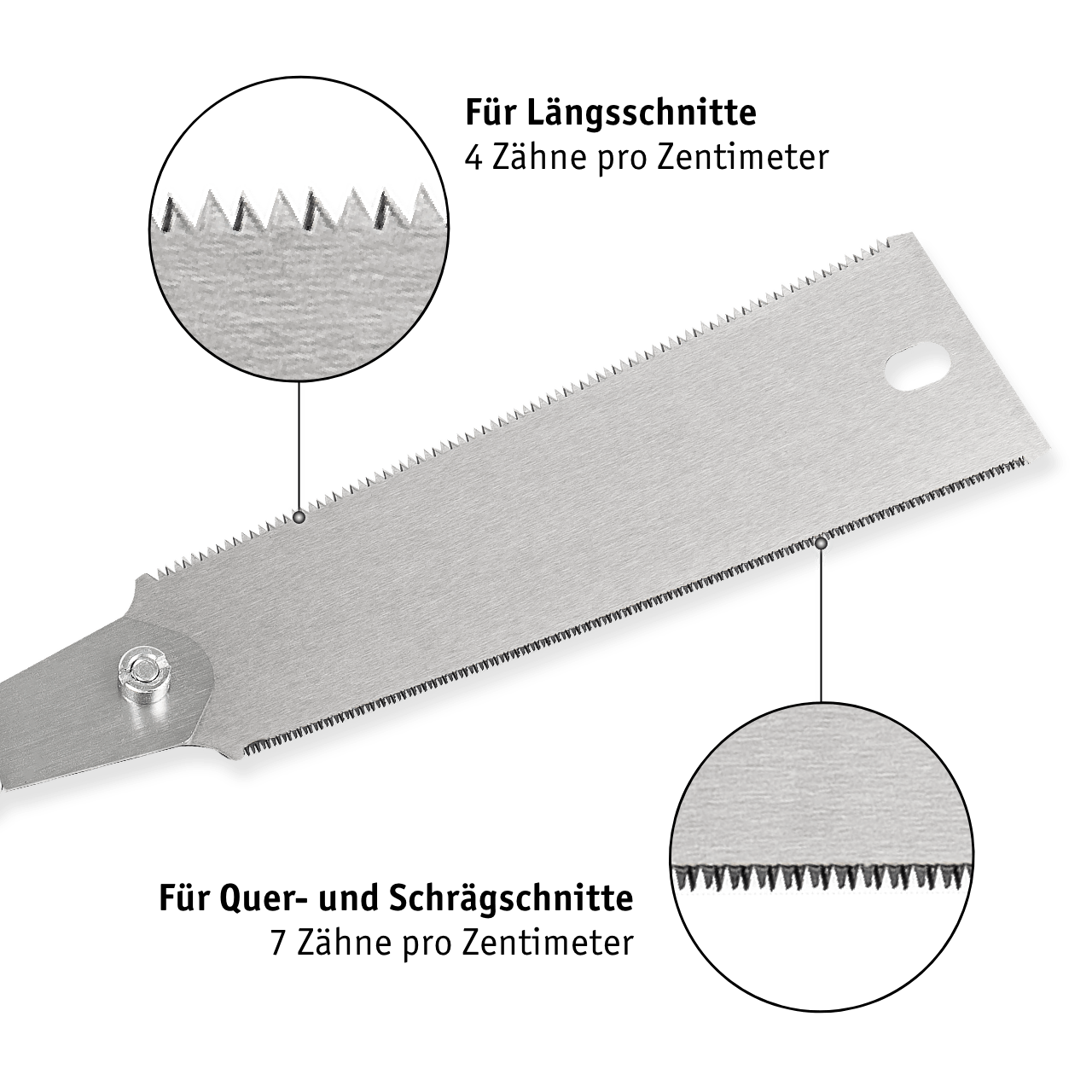
  • Double-sided toothed models: Both longitudinal and cross-sectional views are possible.


The advantages of the Japanese saw

The pulling motion reduces stress on the saw blade, allowing it to be made thinner. This results in more precise cuts compared to Western saws. Furthermore, the steel of the thinner blade pulls straight, leading to sharper and more precise cuts. The double-edged 'Ryoba' saw and the 'Kataba' saw also lack (continuous) reinforcement on the back. This allows you to cleanly saw through even thicker materials.

The saws in the WALTER range

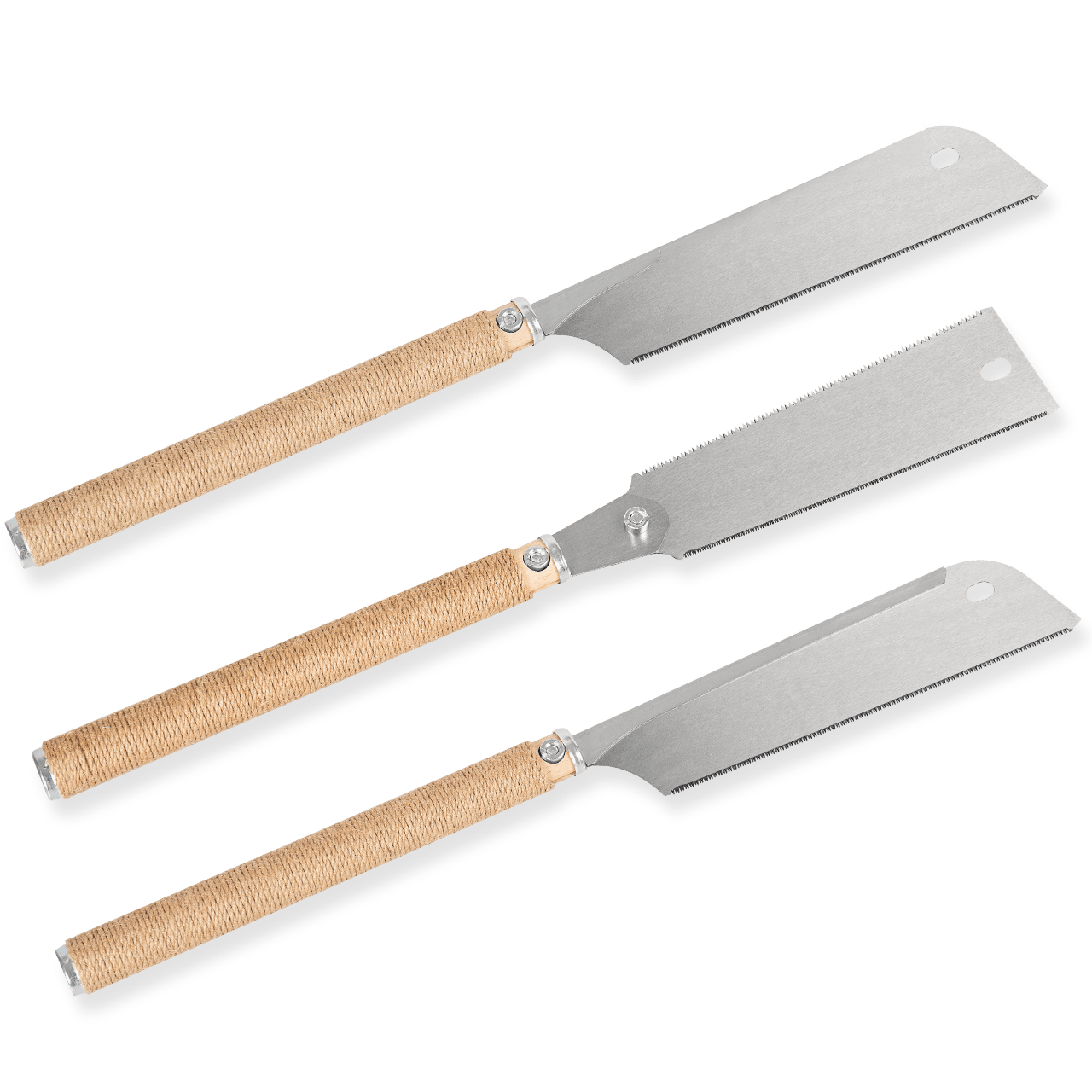
  • Japanese saw 'Dozuki': Flexible saw blade, fine teeth, ideal for clean cuts along the wood grain.
  • Japanese saw 'Ryoba': Double-sided saw blade, suitable for both coarse and fine cuts, ideal for longitudinal and cross cuts.
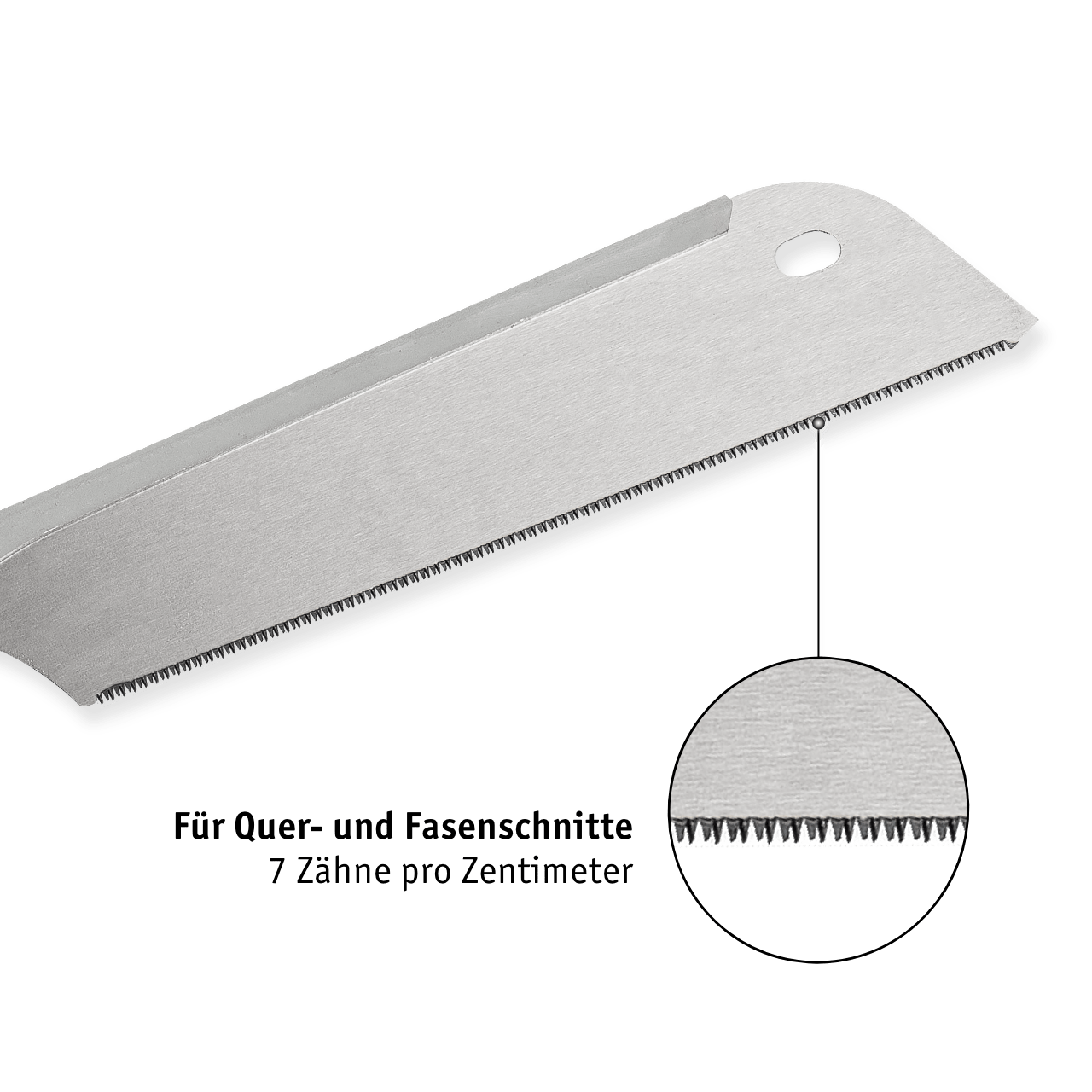
  • Japanese saw 'Kataba': Flexible saw blade with a single-sided toothed edge, ideally suited for precise woodworking.

Simply amazing

With the WALTER Japanese saw set, you get the ideal tool for clean and precise cuts in wood. This 3-piece set features durable saw blades made of high-quality SK5 steel, delivering precise results even with minimal effort. All three saws come with a blade guard. The wooden handle with hemp rope ensures a comfortable and secure grip. The induction-hardened teeth guarantee exceptional cutting performance and outstanding durability.

FAQ

Frequently asked questions & helpful tips

Wofür nimmt man eine Japansäge?

Japansägen werden hauptsächlich zur Bearbeitung und Verarbeitung von Holz eingesetzt. Du kannst sie sowohl für Vollholz als auch für Holzwerkstoffe verwenden. Sie finden Anwendung in der Baumpflege, Zimmerei und bei feinen Holzarbeiten.

Was ist der Vorteil einer Japansäge?

Die Zugbewegung der Japansäge ermöglicht die Verwendung eines sehr dünnen Sägeblatts. Dadurch gelingen dir präzisere und sauberere Schnitte als mit westlichen Sägen, die auf Druck arbeiten.

Wie benutze ich eine Japansäge?

Japansägen arbeiten mit einer Zugbewegung. Das bedeutet: Du ziehst die Säge durch das Holz – so schneidet das dünne Sägeblatt besonders scharf und exakt. Im Gegensatz dazu arbeiten Sägen wie der Fuchsschwanz mit Druck.

Warum heißt die Japansäge Japansäge?

Der Name stammt aus der japanischen Handwerkstradition, aus der diese Sägen ursprünglich kommen. Japansägen sind manuell geführte Handsägen und in verschiedenen Ausführungen erhältlich.

Kann man eine Japansäge schleifen?

Austauschbare Sägeblätter von Japansägen kannst du aufgrund ihrer Härte in der Regel nicht schärfen. Bei nicht austauschbaren Sägen ist das hochwertige Sägeblatt hingegen meist nach langem Gebrauch nachschärfbar.

Back to Top